The Enslavement of African People in Canada
Recognition of slavery as a Canadian fact rather than an imported one, entered into the national historic record.
Poet · Speaker · Author · Commemorative Artist
Nadine Williams writes for the moments an institution intends to keep. Six chapters in the journey of Black peoples in Canada are catalogued today by the Historic Sites and Monuments Board because she made the case for them.

Recognition
Begin the journey here
Welcome friends, it is so incredibly awesome to have you join my pen and I on this amazing journey that we have been cultivating throughout the years. It is my sincere hope that splashes of my pen’s ink will leave an indelible mark, and in return you will add more ink to my pen.
Explore
Designations advanced
Each of the following was brought forward by Nadine Williams and now sits in the national record, catalogued by the Historic Sites and Monuments Board of Canada and Parks Canada.
Recognition of slavery as a Canadian fact rather than an imported one, entered into the national historic record.
The immigration program that brought thousands of Caribbean women to Canada as domestic workers, formally recognized.
The Nova Scotia boxer, the first Black world champion in any sport, recognized as a person of national historic significance.
The commemoration of the coming into force of the Slavery Abolition Act, marked in Canada each first of August.
Historical importance: exceptional individual that left a lasting legacy, served in the First World War, Black entrepreneur, owner of the famous nightclub Rockhead’s Paradise and fosterer of jazz musicians.
One of the first letter carriers of African descent hired by Canada’s federal postal service, representative of more than 30,000 freedom seekers who came to Canada on the Underground Railroad to establish a new life.
The work does not end at the page. It is hung, unveiled, catalogued and kept.
In progress
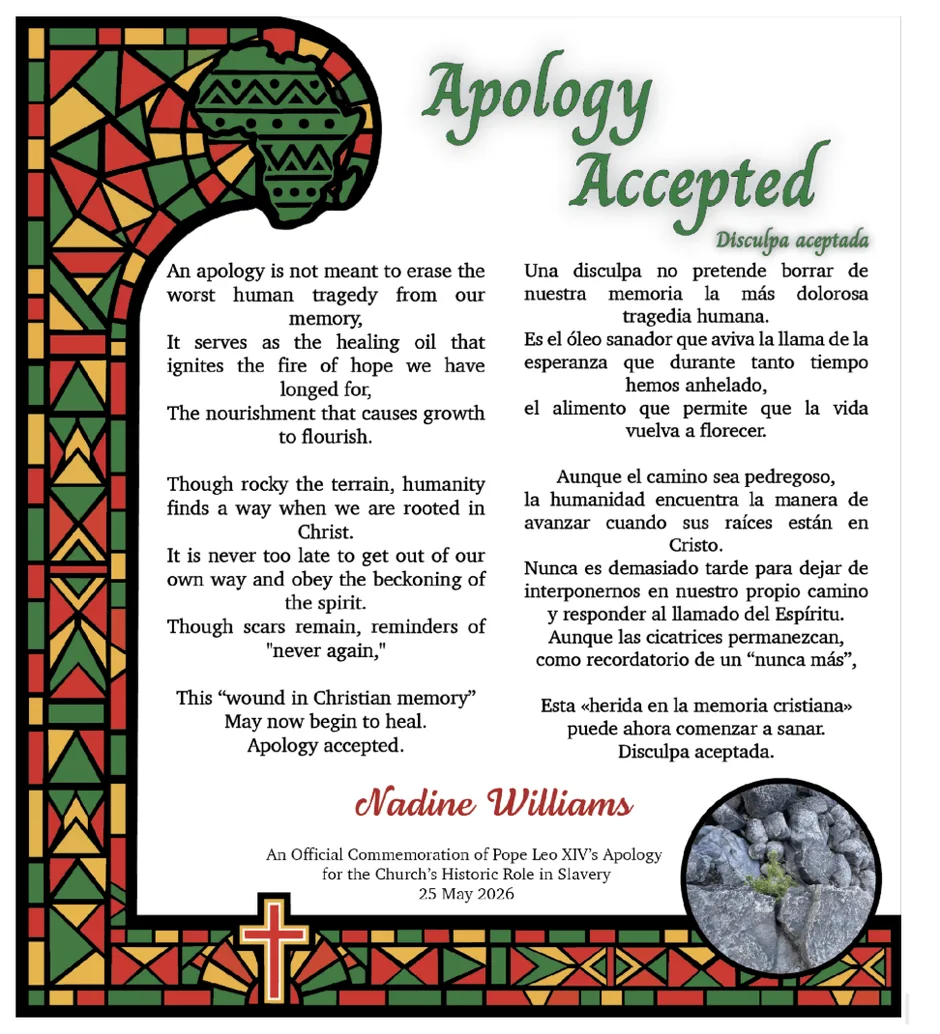
Commemorative plaque · English, French and Spanish
An official commemoration of Pope Leo XIV’s apology of 25 May 2026 for the Church’s historic role in slavery. The work answers an apology on behalf of the people to whom it was owed, and does so in a form built to be mounted, read and kept.
The border carries the red, gold and green in stained glass, the continent of Africa at the crown and the cross at the foot. The closing image is a seedling in broken stone.
This “wound in Christian memory” may now begin to heal. Apology accepted.
Carried under the banner of Emancipation Day, the first of August, marking the 1834 coming into force of the Slavery Abolition Act and designated nationally by the House of Commons in 2021.
Ongoing installation · Exhibited and touring
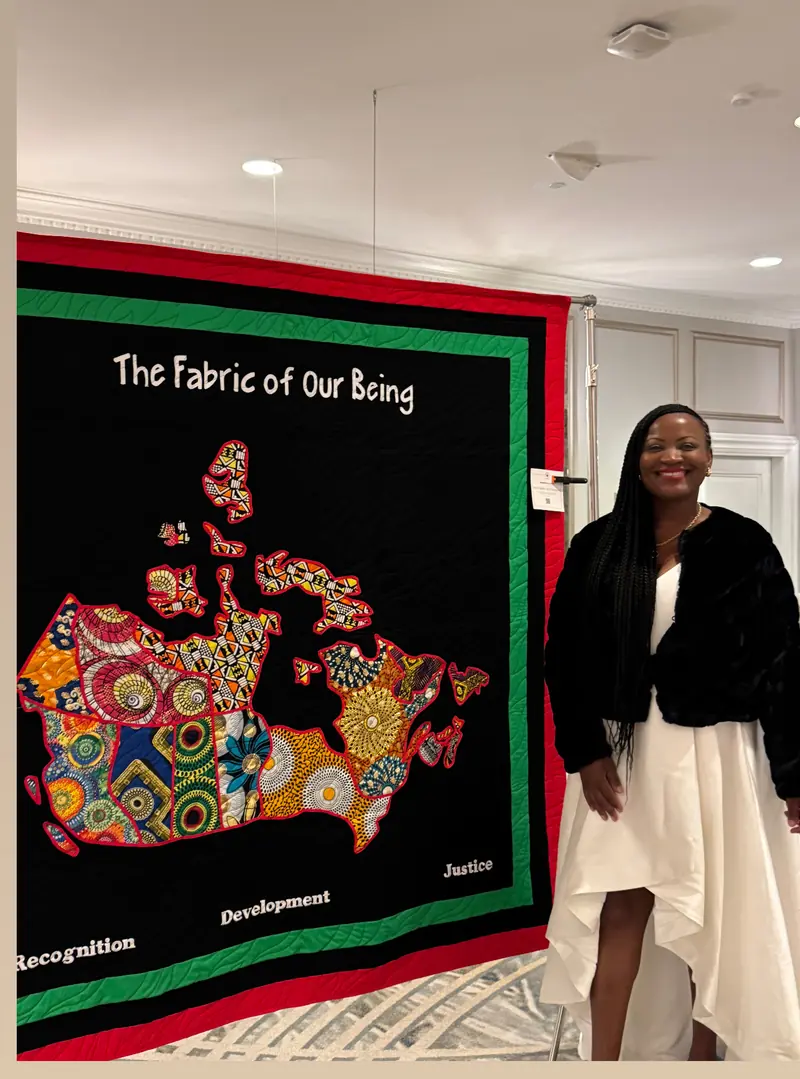
A textile and poetry installation raising awareness of the United Nations International Decade for People of African Descent and its three pillars, recognition, justice and development, which are stitched into the border of the work itself.
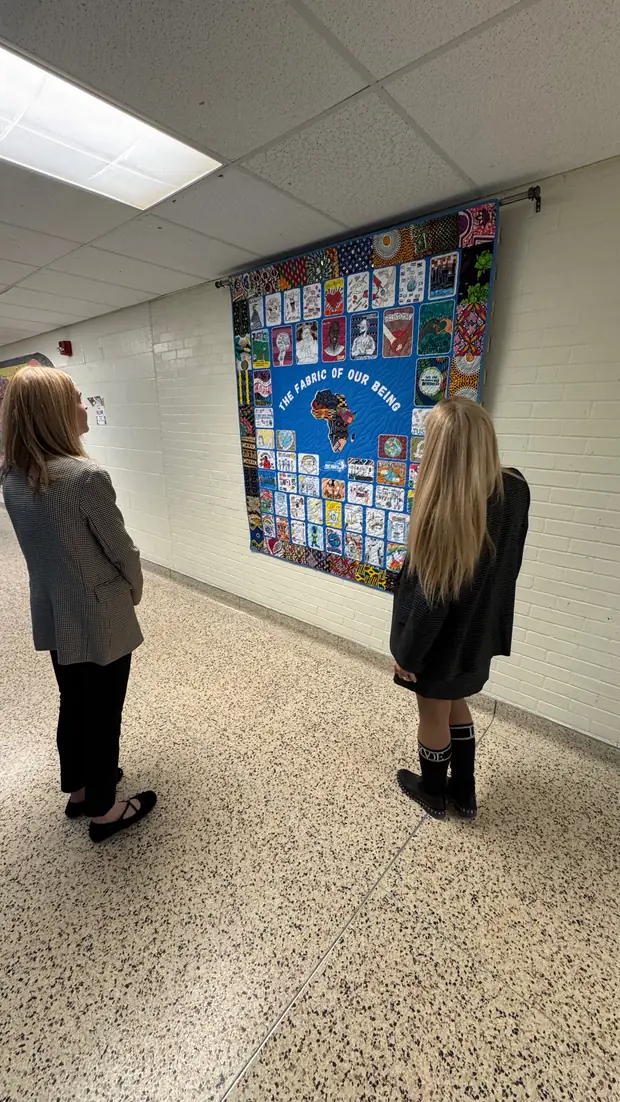
The map of Canada is pieced entirely from African wax print. The country is not merely a place these fabrics arrived in. It is made of them. A second quilt, built with students from their own drawn panels, hangs in a school corridor where it is read every day rather than visited.
A Pareidolia-Inspired Literacy, Science & Poetry Workshop
Presented by Nadine Williams
In our increasingly polarized world, school environments often reflect the tensions of the broader community. Recent focus has frequently landed on what divides us, our differences in opinion, background, and belief. Seeing Humanity Everywhere is an innovative workshop designed to shift that lens.
The Takeaway: By finding “hidden faces” in the mundane, a knot in a tree, a splash of water, or a weathered stone, we remind students that collectively, humanity is in everything. If we look for it with intention, we will find it. This activity serves as a powerful metaphor for our times: if we can find a human connection in a random, inanimate object, we can certainly find it in one another. It challenges students to look past the surface and recognize the shared stories that bind us together.
This workshop is built on the foundations of CRRP, ensuring every student feels seen and their perspective is valued.
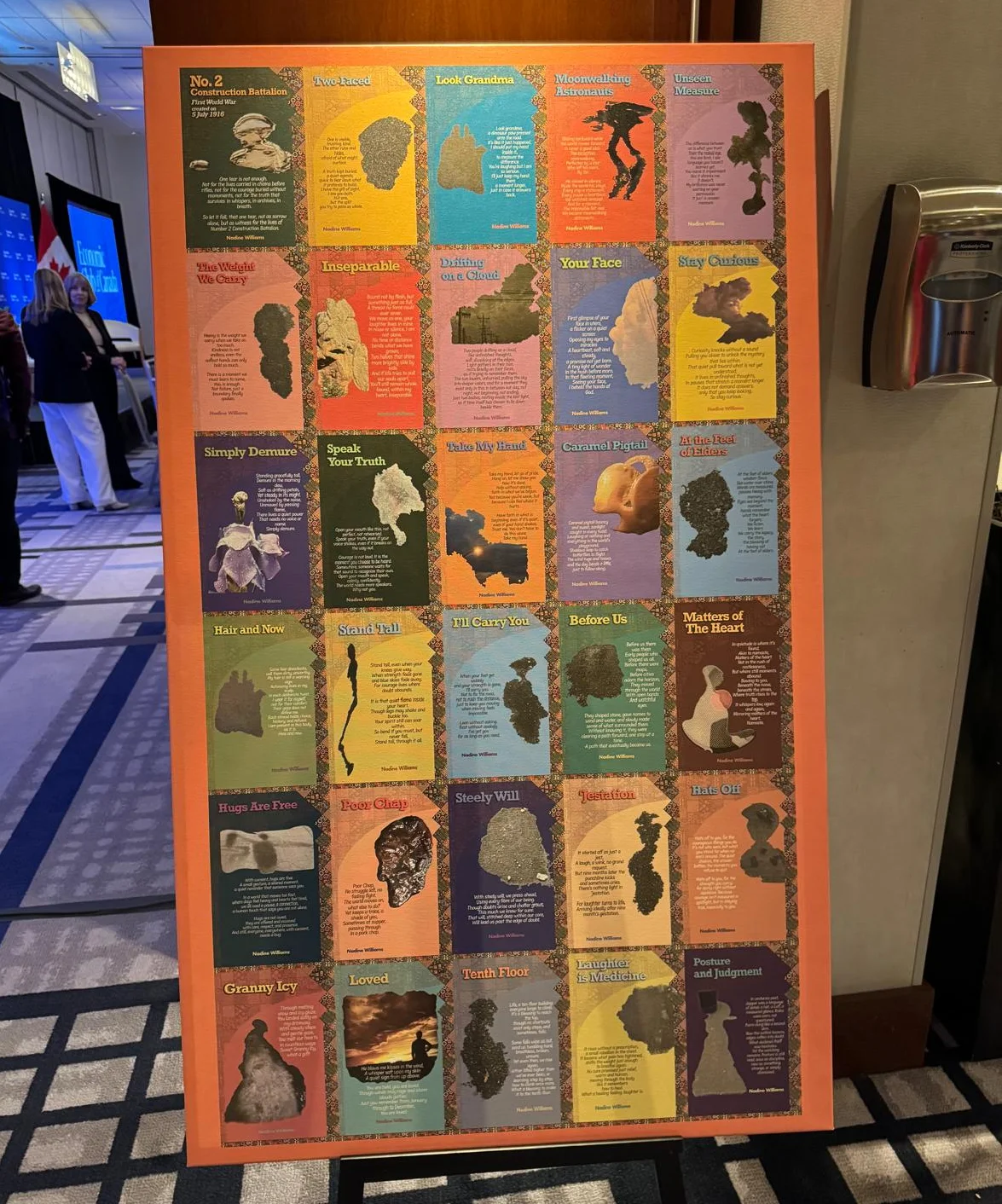
Your blues are like mine, they’re just a different shade.
Nadine Williams
On the record
I am writing to thank you for the copy of your wonderful book. It means so much to receive warm wishes like yours, and I hope you know how much I appreciate them.
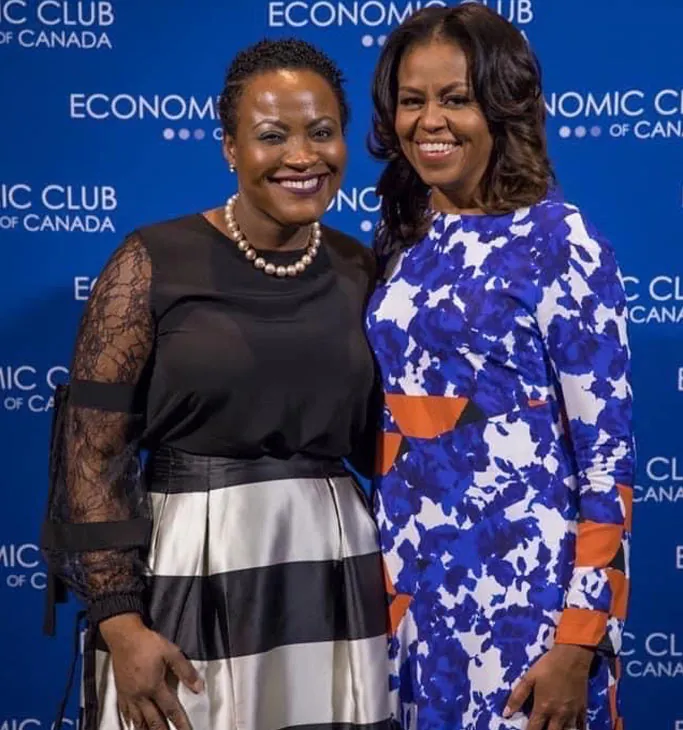
I am grateful for your kind words and appreciate your thoughtfulness in presenting me with the posters featuring your poetry, fitting tributes to the legacies of Viola Desmond and Michelle Obama.
Ways to engage
Every piece is written for the specific occasion and the specific audience it will stand in front of.
Original work created for a moment your institution intends to keep.
Best begun six months ahead
Spoken word and address for gatherings that carry weight.
February and August book early
Work that stays in the building after the visit ends.
Aligned to the school calendar
Inquiries
Tell us the occasion, the audience and the date. Commemorative work is best begun several months ahead of an unveiling, and heritage month dates are held well in advance.
Start the conversation